Home / Arbors and Arched Tops on Garden Gates
Arbors and Arched Tops on Garden Gates
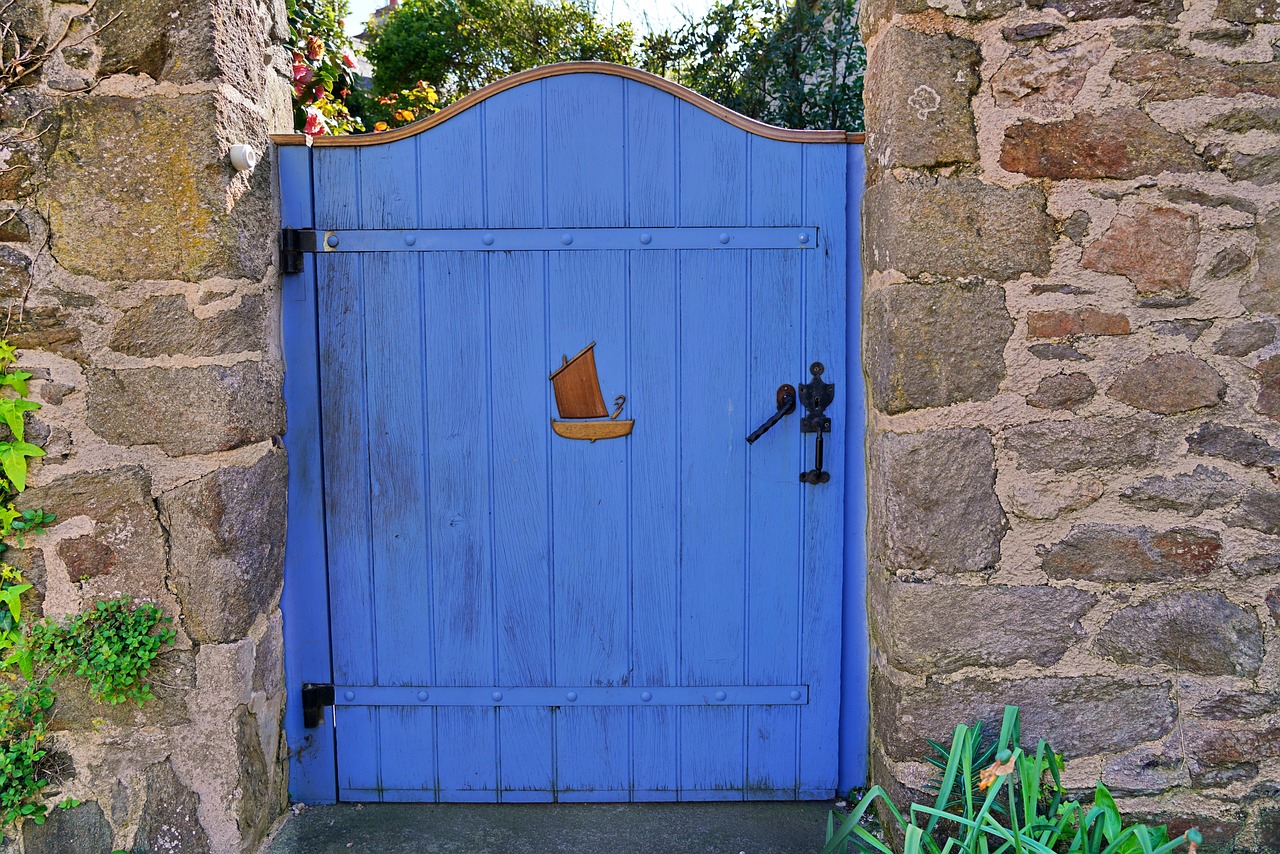
An arbor or an arched top changes a garden gate from a simple opening into a framed entrance, and it does so by adding height, a focal line and a place for climbing plants, at the price of extra wind load and a need for stronger posts. Done with care, the result looks established from the day it is installed.
Overhead shapes have a long history in garden design. They announce the transition from one space to another, they frame what lies beyond and they give vines something to climb. On a metal gate, they also offer the fabricator a chance to show craft, since curves and joinery are easier to see against the sky than on a flat panel.
Arched tops on the gate leaf
An arched top is a curve built into the upper rail of the leaf itself. The edge of the gate rises in a gentle or pronounced arc, usually higher in the center than at the hinge or latch end. The gate then follows the line of the opening, which makes the whole entrance feel designed rather than assembled.
Arches come in several forms. A segmental arch is a shallow curve that adds a little grace without much height. A full round arch is a half circle and creates a strong classical look. A pointed or gothic arch rises to a peak and suits stone walls and older architecture. A low radius curve that dips toward the center, sometimes called a dipped top, suits cottage gardens and informal settings.
The choice depends on the surrounding house and wall. A shallow arc fits a ranch or contemporary home, where clean lines dominate. A deeper round arch pairs well with limestone and stucco, which are common in the Texas Hill Country. Matching the curve to existing architectural lines, such as a window head or a porch arch, ties the gate to the house.
Arbors over the gate
An arbor is a separate structure that stands above and around the gate. Two posts rise on either side and are joined at the top by a crossbeam, a curved frame or a lattice. The gate hangs below. The arbor stays still while the leaf swings.
This separation is useful. Because the arbor does not move, it can be much larger and heavier than a leaf could carry. It also does not add weight to the hinges, so the gate itself can stay light. An arbor can be built to support heavy vines, a lantern or a decorative sign without any strain on the swinging part.
Arbors can be made from steel, aluminum or wrought iron, and they can combine metal with wood. A metal arbor over a wooden gate, or the reverse, can look intentional when the finishes are chosen to match. Powder coating in a deep bronze, black or forest green blends with foliage and stands up to heat and rain.
Proportion and scale
Good proportion is what separates an inviting arch from an awkward one. The opening beneath the top should be tall enough for a person to pass comfortably, with extra clearance for a hat, a large pot or a person carrying something. A common guideline is that the lowest point of the arch should clear well above head height so that no one ducks.
The width of the arbor or arch should match the gate and the walls around it. An arbor that is much wider than the opening looks heavy, while one that is too narrow looks pinched. Posts should be thick enough to look like they can hold the structure, since slender posts under a large beam appear unstable even when they are not.
The overall height should relate to the fence or wall it joins. A tall arbor against a low fence draws attention to the entrance, which can be a pleasing accent. A very tall one can feel out of scale and block views from inside the garden.
Wind load and structural needs
An overhead shape catches wind. A solid arch or a lattice covered with leaves acts like a sail, and Central Texas storms can deliver strong gusts with little warning. The posts must be set deep in concrete and sized to resist overturning. Thin posts set in loose soil will lean within a few seasons.
Open designs let wind pass through, which reduces the load. A lattice with generous gaps or an arch made of a single curved bar catches far less air than a solid panel. If plants will be added, remember that their leaves will increase the surface the wind pushes against, especially when they are fully grown. Planning for that weight and wind exposure up front avoids trouble later.
Connections matter as much as members. Welded joints are strong and sealed, while bolted joints allow disassembly but need periodic tightening. Water should be able to drain from any hollow section, since trapped water rusts steel from the inside and can freeze and split a tube in colder weather.
Supporting climbing plants
Many arbors exist mostly to carry plants. Climbers such as star jasmine, Carolina jessamine, trumpet vine and climbing roses do well in this region, and each has its own habit. Some twine, some cling and some need to be tied in. The structure should offer something the plant can hold: horizontal wires, a lattice or slim bars spaced close enough to grip.
Plants bring weight, and a mature vine can add a great deal to the load on an arbor. They also hold moisture against metal, which can encourage corrosion if the finish is chipped. A sound powder coat and a gap between the plant and the metal where possible help the finish last. Pruning each year keeps growth from overwhelming the structure and from jamming the gate leaf.
Thorny or heavy plants near the latch can catch on clothing and snag the gate. Keeping the leaf area clear, while letting plants fill the upper arbor, gives the best balance of beauty and function.
Choosing finishes and details
Detail work gives an arched gate character. Scrolls, finials, pickets with spear points and simple rings all show up in traditional ironwork. A cleaner look uses plain square bars and a single clean curve. A fabricator can also cut patterns into a panel, such as a sun, a vine or a geometric motif, which looks lovely when light shines through.
The finish protects as well as decorates. Hot-dip galvanizing followed by powder coating gives excellent resistance to rust in humid weather. Aluminum resists corrosion by nature and stays lighter, which suits larger arbors. Wrought iron has a classic look and needs more attention to its paint over time.
Practical care
An arch or arbor needs very little care when the finish is good. Wash off dust and pollen once or twice a year. Look at the joints and the base of each post for rust or movement. Touch up chips promptly. Trim plants so they do not weigh heavily on one side or press against the gate leaf.
After a strong storm, walk around the structure and check that the posts are still plumb and the connections are tight. Catching a small lean early lets it be corrected before it grows.
Putting it together
An arched top or an arbor gives a garden entrance presence. The curve draws the eye, the plants soften the metal and the framing turns an ordinary gate into a threshold. With thoughtful proportion, strong posts and a durable finish, the structure stays handsome and sound through many hot summers and rainy springs, and the garden beyond looks even better for the welcome.